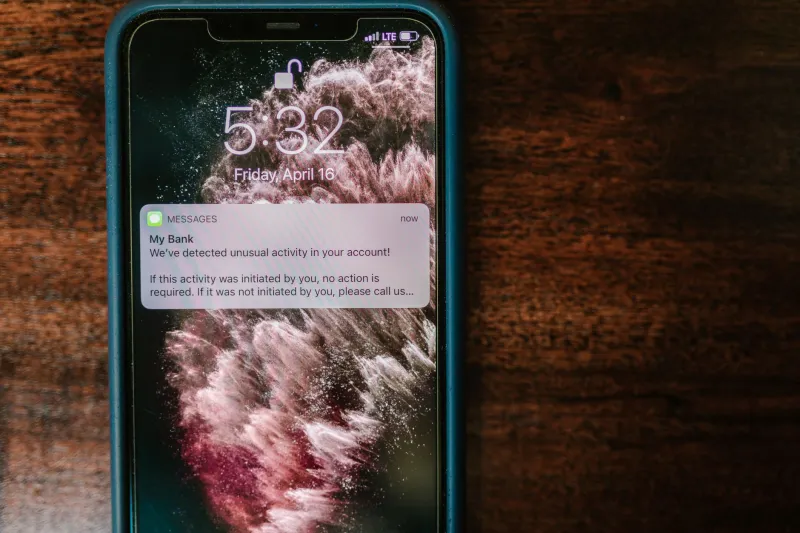
Inbox Archaeology: How Attackers Mine Your Forgotten Emails for Weapons Against You
Most Americans treat their email inbox the way they treat a storage unit: items go in, rarely come out, and the accumulation quietly grows for years without scrutiny. The average Gmail account is estimated to hold tens of thousands of messages spanning a decade or more of digital life. That history feels inert. It is not.
When an email provider suffers a breach — or when an attacker gains access to a single account through credential stuffing, phishing, or a compromised recovery method — that archive becomes a detailed intelligence file. Security researchers and law enforcement investigators who have examined post-breach attacker behavior consistently note the same pattern: sophisticated actors do not simply read the most recent messages. They search. Methodically, algorithmically, and with specific targets in mind.
What Attackers Are Actually Looking For
The instinct is to assume that old emails are low-value. In practice, the opposite is frequently true. An email received in 2016 confirming the creation of a bank account may contain the institution's name, an account number fragment, and a username. A message from 2018 welcoming you to a healthcare portal may include a temporary password and a link to a patient record system. A forwarded document from a former employer may contain Social Security numbers, payroll data, or proprietary contracts.
Beyond document attachments, attackers specifically search for password reset confirmations. These messages reveal which services a target uses, even if the reset itself was completed years ago. Combined with credential databases from other breaches — which are openly traded on criminal forums — an attacker can cross-reference your email address against known leaked passwords and attempt account takeovers across a wide surface area.
Receipts from e-commerce platforms, subscription renewal notices, and shipping confirmations collectively map your purchasing behavior, physical address history, and the financial accounts you have used. Insurance summary emails, tax software notifications, and brokerage statements may disclose income ranges and asset information. Each message, considered alone, seems trivial. Aggregated, they constitute a profile of remarkable detail.
The Breach-to-Harvest Pipeline
The mechanism by which this data reaches attackers is more systematic than many users appreciate. When an email provider experiences a breach, the compromised data does not simply vanish into the internet. Credential sets are packaged and sold, often multiple times, across criminal marketplaces. Buyers then deploy automated tools to test those credentials against dozens of services simultaneously — a technique known as credential stuffing.
Once inside an email account, attackers frequently do not announce their presence. They read, copy, and index. Some sophisticated actors configure mail rules that silently forward incoming messages to an external address while deleting the forwarded copy from the sent folder, allowing ongoing surveillance long after the initial intrusion. Others export entire archive files before locking the legitimate account owner out.
Email providers that have experienced significant breaches in the past decade include services used by hundreds of millions of Americans. The 2016 Yahoo breach — ultimately confirmed to have affected three billion accounts — remains one of the largest single exposures of email archive data in recorded history. Users who have maintained the same email address across many years carry compounding risk: the longer the archive, the broader the attack surface.
Identifying Your Highest-Risk Messages
Not all old emails carry equal risk. Prioritizing your exposure requires understanding which categories of messages are most frequently targeted.
Password reset and account creation confirmations are among the most dangerous artifacts in any archive. Even if the password was changed immediately after the reset, the message confirms that an account exists and identifies the associated email address.
Financial and legal documents forwarded or received via email — including tax forms, loan agreements, and benefits summaries — often contain the precise identifiers required for identity theft, including Social Security numbers and employer identification numbers.
Credential-containing messages from IT departments, software vendors, or internal systems that transmitted temporary passwords in plaintext remain exploitable if those credentials were never changed or if they follow a predictable pattern reused elsewhere.
Healthcare and insurance correspondence may contain policy numbers, provider details, and medical history fragments, all of which have value in insurance fraud schemes.
Real estate and legal closing documents, frequently emailed by attorneys or title companies, often contain wiring instructions, account numbers, and identity verification data.
Practical Strategies for Reducing Your Email Exposure
The goal is not to eliminate your email history entirely — that is neither practical nor necessary. The objective is to systematically remove the messages that carry disproportionate risk while preserving correspondence that has legitimate ongoing value.
Conduct a keyword audit. Most email platforms support advanced search operators. Search your archive for terms such as "temporary password," "your account has been created," "SSN," "wire transfer," "routing number," and "attached please find." Review the results and delete messages that no longer serve a purpose.
Unsubscribe and purge. Marketing emails and transactional receipts from services you no longer use add volume without value. Bulk-delete them using search filters that target sender domains or subject-line patterns.
Download and locally archive what you need, then delete the cloud copy. For documents with genuine long-term legal or financial significance, download them to encrypted local storage or a password-protected external drive. Once secured locally, the cloud copy can be deleted, reducing the breach surface of your email account.
Review your email provider's data retention settings. Some providers offer automatic deletion rules for messages older than a specified threshold. Enabling these settings for categories like promotions and social notifications reduces accumulation without requiring manual intervention.
Audit connected recovery addresses. If your primary email account is used as the recovery address for dozens of other services, a single compromise of that inbox grants access to all of them. Consider using a dedicated, minimally-used address as the recovery mechanism for your most sensitive accounts.
Enable the strongest available authentication on your email account. Hardware security keys and authenticator-app-based two-factor authentication significantly raise the cost of unauthorized access, even when credentials have been leaked.
The Retention Policy Blind Spot
Many Americans assume that emails they have deleted are gone. In most cases, they are not — at least not immediately. Major providers retain deleted messages in a recoverable state for periods ranging from 30 days to several months. Beyond user-facing deletion, providers may retain message metadata, and in some cases message content, for compliance and legal hold purposes, according to their terms of service.
Understanding your provider's actual retention practices — not the simplified summary presented in consumer-facing documentation — requires reading the full privacy policy and, where relevant, the law enforcement guidelines the provider publishes. This information is often publicly available and worth reviewing for any service that handles sensitive correspondence.
A Discipline, Not a Task
Email hygiene is not a one-time project. The archive grows continuously, and the risk it represents compounds with each passing year. Establishing a quarterly habit of reviewing and purging high-risk message categories, combined with stronger authentication and a realistic assessment of what your inbox actually contains, transforms a passive vulnerability into a managed one.
Your past correspondence does not have to become someone else's intelligence asset. But that outcome requires deliberate action — because the silence after every message you send is not the end of the story.