Friction Is the Feature: Why Security Slowdowns Are Protecting You More Than You Realize
There is a moment most of us recognize: the spinning wheel on a multi-factor authentication screen, the brief pause while a password manager re-verifies your device, the email confirmation that asks you to wait up to five minutes before a sensitive account change takes effect. The instinct, almost universally, is frustration. We interpret delay as failure — a sign that the technology is underperforming, that the developer made a poor design choice, or that the service simply isn't worth the hassle.
That interpretation, however, is precisely the wrong one. In the architecture of modern digital security, friction is not an accident. It is a deliberate, carefully calibrated mechanism — and understanding its purpose may fundamentally change how you interact with the tools that protect your most sensitive data.
The Psychology of Impatience and Why Attackers Count on It
Human beings are not wired to tolerate delay well, particularly when it interrupts a task they consider routine. Cognitive scientists refer to this as "completion pressure" — the psychological drive to finish what you started as quickly as possible. When a security prompt interrupts that flow, the brain registers it as an obstacle rather than a safeguard.
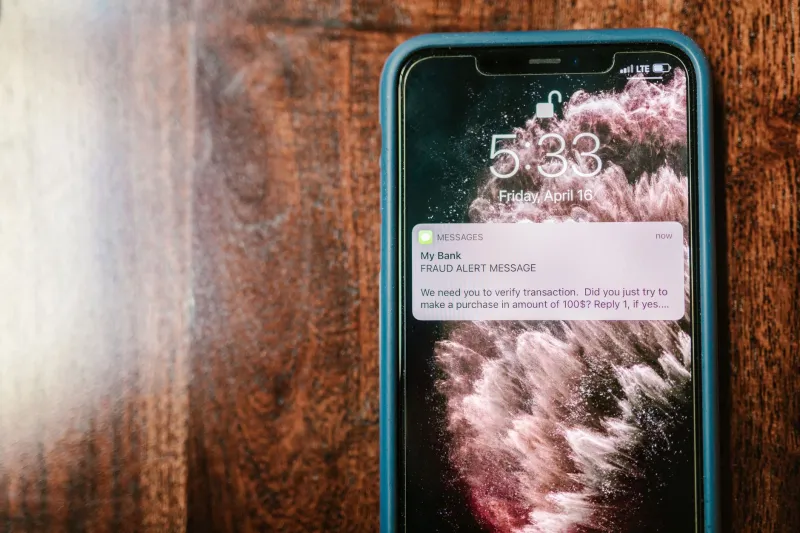
Cybercriminals understand this dynamic intimately. Social engineering attacks — including phishing campaigns, vishing calls, and business email compromise schemes — are frequently engineered to manufacture urgency. A fraudulent email claiming your bank account will be suspended in twenty minutes, or a spoofed IT help-desk call insisting that a security patch must be applied immediately, is designed to short-circuit your deliberate thinking and force a reactive response.
When users have already been conditioned to resent legitimate security friction, that resentment becomes a vulnerability. An attacker who can convince a target that bypassing an authentication step is reasonable — because "it's just slowing things down" — has effectively weaponized the user's own impatience.
What the Delay Is Actually Doing
To appreciate security friction, it helps to understand what is happening during those seemingly idle seconds.
When a multi-factor authentication system sends a one-time code to your phone, the brief window before that code expires is intentional. It is narrow enough to prevent replay attacks — scenarios in which a credential intercepted in transit cannot simply be reused minutes or hours later. The delay between requesting the code and submitting it forces synchronization between the authentication server and your device, a process that inherently resists automation.
Password managers that require biometric re-authentication after a period of inactivity are similarly deliberate. That pause is a session-timeout mechanism. If your device is briefly unattended — at a coffee shop, in an open-plan office, or during a commute — the re-verification requirement creates a window of protection that a simple "stay logged in" toggle would eliminate entirely.
Verification waits on account changes, such as email or phone number updates, serve a different but equally important function. They create a temporal gap during which the legitimate account holder can detect and interrupt an unauthorized modification. Without that delay, an attacker who gains momentary access to an account could redirect all future communications before the real owner is even aware anything has changed.
The Cost of Circumvention
The temptation to disable or work around security friction is understandable, and the options to do so are often readily available. Browsers offer to remember passwords without a manager's re-authentication step. Apps provide "trusted device" settings that suppress future MFA prompts. Email services allow users to whitelist certain senders, bypassing spam filters that occasionally inconvenience legitimate correspondence.
Each of these accommodations represents a tradeoff. Individually, any single shortcut may carry minimal risk. Collectively, they erode the layered defense model that security professionals refer to as "defense in depth" — the principle that no single control should be the last line of protection.
Consider a realistic scenario: a user disables MFA re-prompts on their work laptop because the daily authentication feels redundant. That same laptop is later briefly accessed by an unauthorized party — a hotel business center, a shared household, a moment of physical theft. Because the friction layer was removed, the attacker encounters no meaningful barrier to the email account, the cloud storage, or the financial dashboard stored within it.
The delay that felt like an inconvenience was, in that moment, the only thing standing between routine access and a serious breach.
Designing Friction That Users Will Tolerate
It is worth acknowledging that not all security friction is equally well-designed. Some authentication flows are genuinely cumbersome in ways that exceed their protective value. Poorly implemented CAPTCHA systems, redundant verification steps that serve no additional defensive purpose, and authentication timeouts calibrated so aggressively that they interrupt legitimate workflows are real problems — and security teams should be held accountable for refining them.
The distinction worth drawing is between friction that has a clear defensive rationale and friction that exists because of technical debt or poor user-experience planning. The former deserves patience and respect. The latter deserves criticism and improvement.
For the average American user navigating consumer-grade security tools — banking apps, email providers, social media platforms, and cloud storage services — the friction encountered in day-to-day use almost always falls into the first category. The MFA prompt on your financial account is not there because the developer couldn't figure out a smoother login flow. It is there because credential-stuffing attacks, in which automated tools test stolen username-and-password combinations against thousands of accounts per minute, are a documented, ongoing threat that MFA reliably defeats.
Reframing the Pause
The most practical shift a security-conscious user can make is a perceptual one: reframe the delay not as a malfunction but as confirmation that the system is working.
When your password manager prompts you for a fingerprint before autofilling credentials, that is the tool verifying that the person requesting access is the same person who set it up — not an attacker who grabbed your unlocked phone. When a bank sends a verification code that expires in thirty seconds, that tight window is actively defeating the category of attack designed to steal it.
Patience, in this context, is not a passive virtue. It is an active security behavior. Users who have internalized this framing are demonstrably harder to manipulate through urgency-based social engineering, because they have already accepted that legitimate security sometimes requires them to slow down.
In an era when cyberattacks are increasingly automated, rapid, and psychologically sophisticated, the willingness to tolerate a few extra seconds at an authentication screen represents a meaningful — and largely free — defensive advantage. The attackers are counting on your impatience. The most effective response is to refuse to give it to them.