Cried Wolf, Clicked Through: How Hackers Weaponize Your Exhaustion With Security Alerts
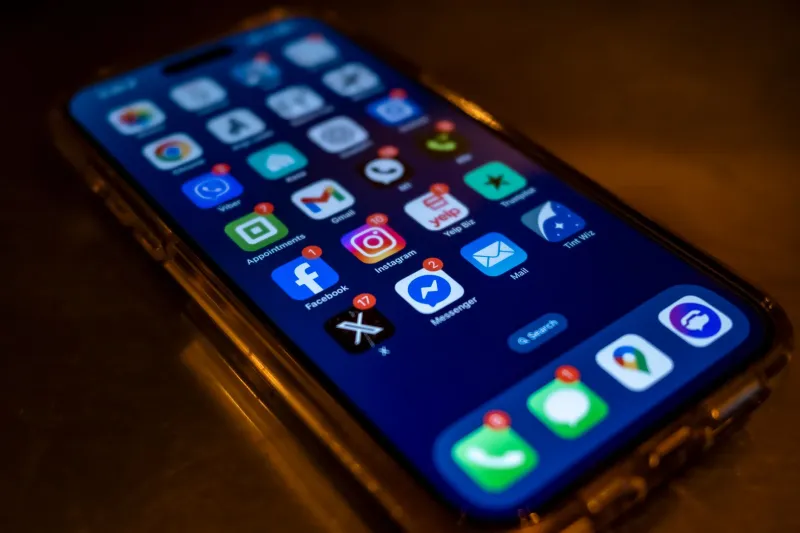
There is a particular kind of digital numbness that sets in after the hundredth security notification of the week. The banner appears, the badge glows red, the email subject line reads "Urgent: Verify Your Account" — and you dismiss it without a second thought. That dismissal, repeated thousands of times across millions of users, is not an inconvenience to cybercriminals. It is a strategy they have spent years perfecting.
Alert fatigue — the psychological phenomenon in which repeated exposure to warnings erodes a person's willingness to respond to them — has migrated from the world of hospital emergency rooms and air-traffic control into the everyday experience of the American internet user. And the consequences are no less serious.
The Architecture of Exhaustion
To understand how this vulnerability is exploited, it helps to understand how it is manufactured. Security researchers have documented a class of attacks sometimes called MFA bombing or push notification flooding, in which an attacker who already possesses a victim's username and password repeatedly triggers multi-factor authentication requests. The goal is not to guess the right code. The goal is to generate so many prompts that the target, confused or simply tired, approves one just to make the alerts stop.
This technique has been linked to high-profile breaches at major U.S. corporations. In several documented cases, employees approved fraudulent authentication requests after receiving dozens of legitimate-looking prompts in rapid succession — sometimes in the middle of the night, when cognitive defenses are at their lowest.
But flooding is only one dimension of the problem. Attackers also benefit passively from an environment they did not create: the sheer volume of routine security communications that legitimate organizations send. Password expiration notices, login-location alerts, privacy policy updates, two-factor confirmation emails — the average American receives a significant number of these messages weekly. When genuine warnings arrive in the same visual format as a dozen routine notifications, the brain begins treating them all as low-priority noise.
The Psychology Hackers Are Counting On
Cognitive scientists refer to the underlying mechanism as habituation — the tendency of the nervous system to reduce its response to stimuli that appear frequently and seem to carry no consequence. It is an efficient adaptation in most areas of life. In the context of digital security, it is a liability.
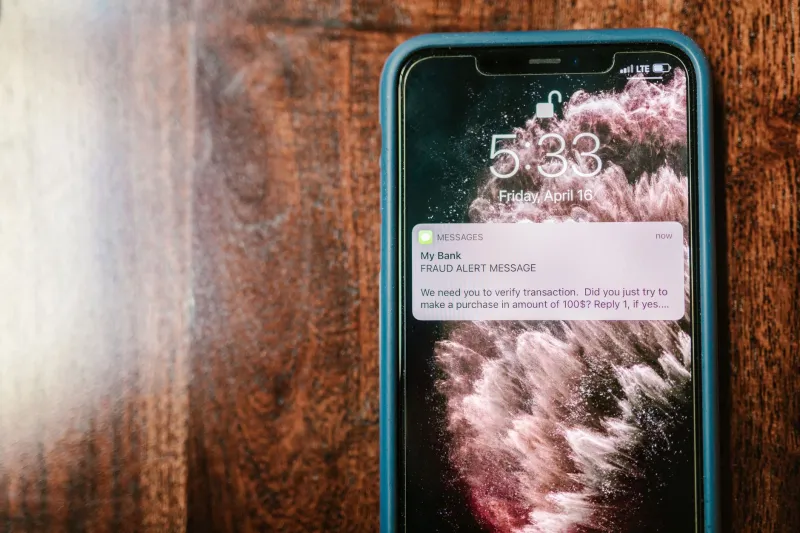
Phishing campaigns increasingly exploit this dynamic by mimicking the aesthetic of legitimate security alerts with remarkable precision. A fraudulent email from what appears to be your bank, formatted identically to the account-activity notices you receive every week, benefits directly from the low-scrutiny reflex that those routine messages have trained you to apply. The attacker is not overcoming your vigilance. They are borrowing the credibility that your bank has built up over years of mundane correspondence.
Social engineering specialists have noted a related tactic: embedding a malicious request inside a communication that appears to resolve a problem rather than create one. A message that says "We noticed unusual activity on your account — click here to confirm it was you" positions itself as a solution to a threat, not as the threat itself. Users who would hesitate before clicking an unsolicited link often feel compelled to act when the framing suggests that inaction carries risk.
Distinguishing Signal From Noise
The practical challenge for any individual user is developing a reliable method for separating legitimate security communications from manipulative ones, without investing significant effort in every alert they receive. Several principles are worth internalizing.
Verify through a separate channel. If you receive a security alert that asks you to take action — clicking a link, approving a login, resetting a credential — navigate directly to the service in question by typing its address into your browser or opening its official application. Do not use any link, phone number, or contact information provided in the alert itself. Legitimate services will surface the same information through their authenticated interfaces.
Treat urgency as a warning sign, not a directive. Pressure to act immediately, warnings that your account will be locked within minutes, or claims that failure to respond will result in permanent loss of access are classic manipulation tactics. Genuine security systems are designed to accommodate the reality that users cannot always respond instantly.
Audit your notification sources periodically. Many Americans have accounts with dozens of services that send security communications. Conducting a periodic review of which services have permission to contact you — and through which channels — reduces the overall volume of alerts and makes genuine warnings easier to identify.
Understand what your MFA app should and should not do. Authentication apps generate time-limited codes; they do not send push notifications asking you to approve actions you did not initiate. If you receive an unexpected approval request, the correct response is to deny it and change your password immediately, not to approve it to stop the prompts.
The Institutional Dimension
It would be incomplete to frame alert fatigue as purely an individual failing. Organizations that issue excessive, poorly calibrated security notifications bear meaningful responsibility for the environment they create. When a company sends password-change reminders on arbitrary schedules, flags routine logins as suspicious, or formats promotional emails to resemble account-security notices, it erodes the attentive posture it ostensibly wants its users to maintain.
The cybersecurity community has increasingly recognized that notification design is a security issue, not merely a user-experience consideration. Alerts that are specific, actionable, and infrequent are more likely to receive genuine attention than a high volume of vague warnings. Several industry frameworks now include guidance on alert hygiene as a component of organizational security posture.
Restoring the Reflex
The goal is not to become suspicious of every notification — that level of vigilance is neither sustainable nor practical. The goal is to preserve a functional pause: a brief moment of genuine consideration before acting on any security-related prompt, regardless of how routine it appears.
That pause is precisely what attackers are working to eliminate. The volume of fake alerts is designed to make the pause feel wasteful. The urgency embedded in phishing messages is designed to make the pause feel dangerous. Recognizing those design choices for what they are — deliberate manipulation of a known psychological vulnerability — is the foundation of a more resilient security posture.
In the arms race between attackers and defenders, human attention remains one of the most contested resources. Protecting it is not a matter of paranoia. It is a matter of recognizing that your exhaustion, carefully cultivated, is someone else's opportunity.