Silence by Design: How Attackers Train You to Ignore the Warnings That Actually Matter

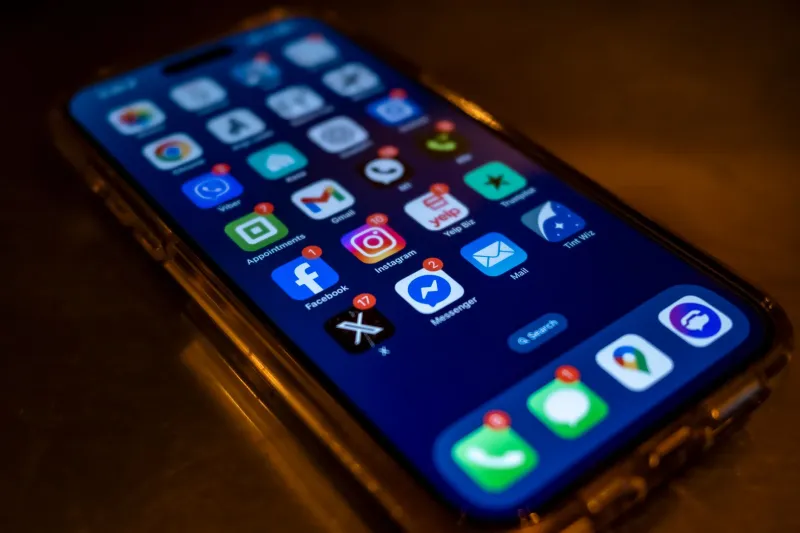
There is a particular kind of exhaustion that does not come from physical labor. It settles in quietly, born from the relentless stream of beeps, banners, and badge counts that define modern digital life. Security researchers have a clinical name for it: alert fatigue. Cybercriminals have something else — a playbook.
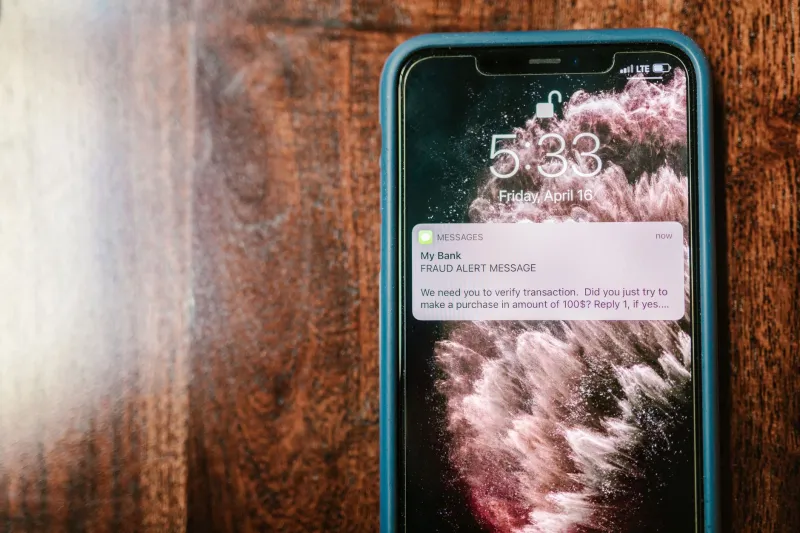
Across the United States, millions of people receive security notifications every day. Login attempt detected. New device signed in. Unusual activity on your account. For most users, these messages have become background noise, as easy to dismiss as a car alarm in a parking garage. That dismissiveness, security professionals warn, is no accident. In many cases, it is the goal.
The Mechanics of Manufactured Noise
To understand why attackers invest effort in triggering alerts they have no immediate intention of exploiting, it helps to think in terms of conditioning. Behavioral psychology describes a process called habituation — the tendency of any organism to reduce its response to a stimulus that is repeatedly presented without consequence. Flood someone with enough harmless-seeming login warnings, and the brain begins to file them under "routine." When the genuinely dangerous alert arrives, it receives exactly the same automatic dismissal.
Security researcher Marcus Carey, who has spent years studying the human factors behind enterprise breaches, has described this approach as "weaponizing the mundane." Attackers do not need to break your authentication system if they can break your attention first.
The mechanics vary. In some documented cases, threat actors have used credential-stuffing tools — programs that automatically test stolen username-and-password combinations against a target account — not with the intent to gain immediate access, but to generate a sustained wave of failed-login notifications. After weeks of receiving "someone tried to log in" emails that lead nowhere, the account holder begins treating them as junk. When the attacker eventually succeeds, the confirmation email lands in a mentally pre-sorted pile of irrelevance.
MFA Bombing: Alert Fatigue as a Breach Vector
Perhaps the most technically sophisticated version of this tactic is multi-factor authentication (MFA) bombing, sometimes called MFA fatigue or push bombing. In this scenario, an attacker who has already obtained a victim's password repeatedly triggers push-notification approval requests to the victim's authentication app. Each request asks: "Did you just sign in? Approve or Deny."
The attacker sends dozens of these prompts in rapid succession, often in the middle of the night or during a busy workday. The intended outcome is simple: the victim, overwhelmed or half-asleep, eventually taps "Approve" just to make the notifications stop.
This technique gained widespread public attention in 2022 when it was used against employees at several high-profile technology companies. In one case, an attacker reportedly combined MFA bombing with a follow-up phone call, impersonating IT support and telling the target that approving the request would resolve a system issue. The combination of digital saturation and social engineering proved devastatingly effective.
Why Your Brain Is Not Built for This
The human attention system was not engineered for the notification economy. Cognitive load research consistently shows that when individuals are required to evaluate a high volume of similar stimuli, their ability to distinguish between them degrades over time. Security operations center analysts — professionals whose entire job is monitoring alerts — are well acquainted with this phenomenon. Studies have found that analyst accuracy drops measurably after sustained exposure to high-volume alert queues, even among trained personnel.
For ordinary consumers without dedicated security training, the effect is more pronounced. A 2023 survey conducted by a cybersecurity awareness nonprofit found that more than 60 percent of American adults reported routinely dismissing security notifications without reading them fully, with the most common reason cited as "I get too many of them to keep up."
That statistic represents, in practical terms, millions of unlocked doors.
Distinguishing Signal From Engineered Static
Recognizing that alert fatigue is a deliberate attack surface is empowering, but only if it translates into concrete behavioral changes. Security professionals recommend several strategies for consumers who want to stay vigilant without drowning.
Audit your notification sources. Not every app that requests permission to send security alerts genuinely needs that permission. Review your notification settings on both iOS and Android and revoke access from services that do not handle sensitive data. Reducing overall notification volume makes genuine security alerts easier to identify.
Establish a personal baseline. Spend one week paying close attention to the security notifications you typically receive — their frequency, their source, and their usual content. Deviations from that baseline, such as a sudden spike in login-attempt warnings, are more meaningful than any individual alert.
Never approve an MFA request you did not initiate. This rule is absolute. If a push notification asking you to approve a sign-in arrives when you are not actively logging in to anything, deny it immediately and change your password. Then contact the service's support team.
Use number-matching or context-aware MFA where available. Many major authentication apps now offer number-matching, which requires the user to enter a code displayed on the login screen into the authentication app, rather than simply tapping approve. This single design change dramatically reduces the effectiveness of push-bombing attacks.
Create a dedicated channel for critical alerts. Consider routing security emails from your most sensitive accounts — banking, email, health insurance — to a separate inbox that you check deliberately rather than passively. Removing these messages from the noise of your primary inbox restores their psychological salience.
The Institutional Dimension
While individual vigilance matters, security researchers are quick to note that the burden cannot rest entirely on consumers. The platforms and services that generate security notifications bear responsibility for designing alert systems that minimize unnecessary volume without sacrificing coverage. Notification consolidation, intelligent frequency capping, and clearer severity tiering are all engineering choices that reduce the conditions attackers exploit.
Regulators are beginning to take notice as well. The Federal Trade Commission has increasingly scrutinized the security practices of companies whose notification architectures leave consumers exposed, and industry groups have begun publishing best-practice frameworks for alert design that explicitly address fatigue as a threat vector.
Reclaiming Your Attention
The broader lesson embedded in the alert fatigue playbook is one that extends well beyond any single attack technique: in the digital threat landscape, your attention is a security asset. Attackers know this. They budget for it. They engineer campaigns specifically designed to deplete it.
The most resilient defense begins not with a firewall or a software update, but with the recognition that indifference — however understandable given the relentless pace of modern notifications — is precisely what adversaries are counting on. Treating your own vigilance as something worth protecting is, increasingly, one of the most consequential security decisions you can make.