Engineered Alarm: How the Apps You Trust Are Conditioning You to Click Before You Think
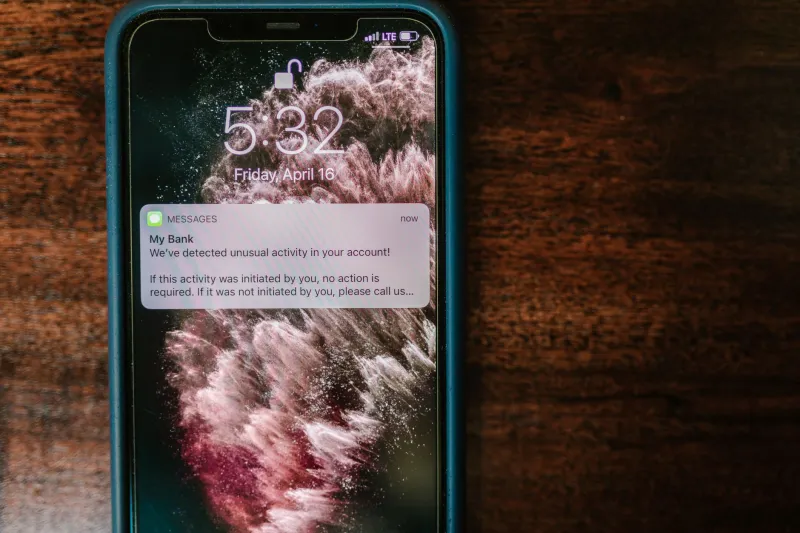
Your phone lights up. A banking app warns that unusual activity has been detected on your account. A social media platform tells you someone is trying to log in from an unrecognized device. A productivity tool announces that your subscription is about to expire and your files may be lost. Each message lands with the specific weight of a problem that demands immediate resolution.
You tap through before you have fully read the words.
This is not an accident. It is, in many cases, the intended outcome — and it is reshaping the security landscape in ways that most Americans have yet to fully appreciate.
The Architecture of Urgency
Modern app design is not neutral. Every element of a push notification — its wording, its timing, its visual presentation — is the product of deliberate engineering informed by behavioral psychology and years of A/B testing. Platforms have learned, with considerable precision, which emotional triggers produce the fastest engagement.
Fear of financial loss. Fear of account compromise. Fear of missing something socially significant. Fear of losing work. These are not incidental side effects of useful alerts; they are the mechanisms by which engagement is manufactured.
Banking applications, for instance, frequently phrase routine fraud alerts in language calibrated to produce alarm: "Action required," "Unauthorized attempt detected," "Your account may be at risk." Social platforms send notifications about login attempts, follower milestones, and message requests with a cadence and urgency that implies immediate consequence. Productivity and cloud storage tools warn of impending data loss or expiring access in ways that compress the user's decision window to near zero.
None of this is technically illegal. In most cases, the underlying information being communicated is accurate. But the psychological framing is designed to suppress the very critical thinking that security professionals spend considerable effort trying to cultivate in users.
The Grey Zone Between Legitimate and Manipulative
Cybersecurity discourse has long distinguished between malicious phishing attempts and trustworthy communications from verified institutions. That binary, however, is becoming less useful. The more instructive question is not whether a notification originates from a legitimate source, but whether its design is structured to circumvent rational evaluation.
When a real banking app conditions you to tap "Verify Now" in response to a scary alert without pausing to examine the context, it is doing something functionally similar to what a phishing message attempts. The destination may be safe. The habit being reinforced is not.
Security researchers have a term for this effect: reflexive compliance. It describes the behavioral state in which users respond to familiar-looking urgency cues automatically, without engaging deliberate judgment. Companies that rely on high notification engagement rates benefit from reflexive compliance. Cybercriminals who study user behavior benefit from it too.
How Attackers Exploit the Conditioning
Consider a relatively straightforward social engineering scenario. A threat actor targets an individual who uses a popular financial application. That person has received dozens of legitimate urgent alerts from that app over the past year and has learned, through repetition, to act on them quickly. The attacker sends a spoofed SMS or email mimicking the app's notification style — same color palette, same phrasing, same implied threat. The target, already conditioned to respond without hesitation, follows the embedded link before examining the sender address or URL.
The app itself never sent that message. But the app trained the behavior that made the attack possible.
This is not a hypothetical scenario. Vishing and smishing campaigns — phone- and text-based social engineering attacks — routinely exploit brand familiarity and urgency conditioning. The Federal Trade Commission has documented a sustained rise in impersonation scams targeting financial institution customers, many of which succeed precisely because legitimate institutions have already normalized high-pressure, act-now communication.
The Accountability Gap
It is worth asking who bears responsibility for this dynamic. App developers and platforms operate within a regulatory environment that imposes few constraints on notification design. There are no federal standards in the United States governing the psychological framing of push notifications the way there are rules governing, for example, debt collection communications. Companies are largely free to optimize for engagement without meaningful disclosure about how that optimization affects user security posture.
Some security advocates have argued that this represents a form of externalized cost. Platforms capture the engagement benefits of urgency-engineered notifications while the security consequences — heightened susceptibility to social engineering, reflexive compliance with spoofed messages — are borne by users and, ultimately, by the financial system that processes fraud claims.
The argument has not yet produced significant regulatory momentum, but awareness of the dynamic is growing within the cybersecurity research community.
Practical Defenses for the Conditioned User
Understanding the mechanism does not eliminate its effect, but it does create the possibility of interrupting it. Several practices can meaningfully reduce reflexive compliance without requiring users to disengage from the apps they depend on.
Establish a personal verification ritual. Before acting on any notification that claims urgency — particularly one involving financial accounts, login activity, or account status — navigate directly to the app itself rather than tapping through the notification. Open the application independently, log in through the standard interface, and check whether the alert is reflected in your account dashboard. Legitimate threats will be visible there. Fabricated ones will not.
Audit notification permissions regularly. Not every app that requests notification access needs it. Reducing the overall volume of alerts you receive makes it easier to treat each one with appropriate attention rather than developing the numbness that accelerates reflexive behavior.
Recognize urgency language as a signal to slow down. Phrases like "immediate action required," "your account will be suspended," or "verify now to avoid loss" should function as prompts for increased scrutiny, not decreased deliberation. The more alarming a notification sounds, the more carefully it warrants examination.
Enable multi-factor authentication through an authenticator app rather than SMS. This reduces the attack surface available to criminals who exploit urgency conditioning, since a spoofed notification cannot easily harvest a time-sensitive authenticator code.
A Security Culture That Serves Users, Not Metrics
The broader problem is cultural. American consumers have been enrolled, largely without explicit consent, in a decades-long behavioral experiment designed to maximize platform engagement. The security implications of that experiment were not part of the original design brief, and they have rarely been part of the subsequent accountability conversation.
For individual users, the most durable protection is a simple reframe: urgency in a notification is not evidence of legitimacy. It is a design choice. Treat it accordingly.
The apps you trust may not be trying to compromise your security. But in optimizing for your attention, they may be doing the groundwork for someone who is.