The Invisible Ink Inside Your Files: How Metadata Quietly Exposes Everything You Thought You Were Hiding
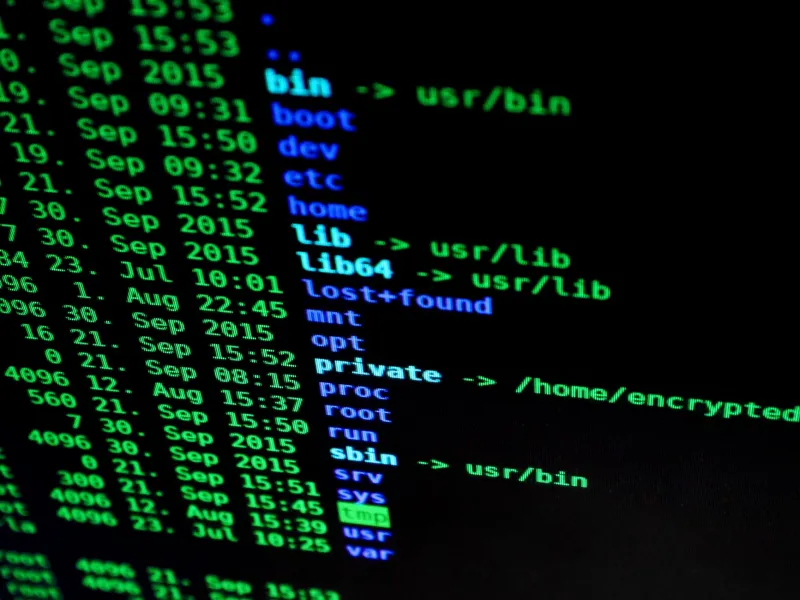
When most people share a photograph online, they think about what the image shows. They crop out a cluttered background, maybe apply a filter, and consider the job done. What they rarely consider is the dense packet of invisible information the file carries alongside the pixels — a structured record that can name the device that captured the image, log the precise GPS coordinates where the shutter was pressed, and timestamp the moment down to the second.
This hidden layer is called metadata, and for the overwhelming majority of Americans who share files daily across social media, email, and cloud platforms, it represents a privacy vulnerability that receives almost no attention relative to its actual risk.
What Metadata Actually Is — and Where It Lives
Metadata is, in its simplest definition, data about data. It does not appear in the visible content of a file; instead, it is embedded in the file's underlying structure, readable by software tools but invisible to anyone simply viewing the image or opening the document.
The most widely encountered form is EXIF data — short for Exchangeable Image File Format — which digital cameras and smartphones automatically write into every photograph at the moment of capture. A standard EXIF record can contain the camera make and model, shutter speed, aperture setting, ISO value, focal length, and, critically, latitude and longitude coordinates if the device's location services were active. For smartphone users, that last field is populated by default unless the camera app's location permissions have been explicitly revoked.
Document formats carry their own equivalent. A Microsoft Word file stores, within its XML structure, the author's registered username, the organization name tied to the software license, the total editing time, and a revision history that can preserve deleted text across multiple drafts. PDF files routinely log the application used to create them, the date of creation, and modification timestamps. Even audio files embed metadata through the ID3 tag standard, which can record recording device information and geographic data when that information is available.
Real-World Cases Where Hidden Data Changed Everything
The consequences of overlooked metadata are not theoretical. Law enforcement agencies, investigative journalists, and adversarial actors have all exploited it with documented, real-world effect.
One of the most cited examples in digital forensics circles involves John McAfee, the antivirus software pioneer who became a fugitive from Belizean authorities in 2012. A Vice magazine reporter traveling with McAfee published a photograph taken on an iPhone. The EXIF data embedded in that image included GPS coordinates pointing to a specific location in Guatemala — effectively broadcasting McAfee's hiding place to anyone who examined the file's properties. McAfee was located and detained shortly thereafter.
In a domestic law enforcement context, metadata has repeatedly surfaced in criminal proceedings. Federal investigators have used document metadata to establish that files were authored on specific machines at specific times, contradicting defendants' claims about when or whether certain communications were created. Revision histories embedded in Word documents have exposed prior drafts that defendants argued never existed.
Journalists and whistleblowers occupy the other side of this risk. Leaked documents that were not properly sanitized before distribution have, on several occasions, carried authorship metadata that helped identify the source. Security researchers working with leaked corporate or government files routinely check metadata as a first-order analysis step precisely because so many individuals forget to strip it.
The Location History Problem
Beyond static file metadata, the broader category of location history presents a parallel and arguably more serious exposure. Both iOS and Android devices maintain logs of where a user has been, derived from GPS, Wi-Fi triangulation, and cellular tower data. Apple's "Significant Locations" feature and Google's Timeline function create detailed chronological maps of a user's movements, retained by default and synchronized to cloud accounts.
This data has entered legal proceedings through device seizures and cloud account warrants. In civil litigation, location history has been subpoenaed to verify or contradict alibis. Advertisers have long purchased aggregated location data from data brokers who acquire it from app developers — a supply chain that the Federal Trade Commission has increasingly scrutinized but not yet fully dismantled.
The risk is compounded by the fact that location data is rarely isolated. When a photograph with embedded GPS coordinates is cross-referenced against a user's location history, the combined record becomes a highly precise behavioral profile — one that can reveal home addresses, workplace locations, medical appointments, places of worship, and the identities of frequent associates.
Auditing and Stripping Metadata: A Practical Framework
The good news is that metadata exposure is a largely solvable problem, provided users take deliberate steps to address it before sharing files.
For photographs, the most straightforward defensive measure is disabling location access for the camera application at the operating system level. On iOS, this is managed through Settings → Privacy & Security → Location Services → Camera, where the permission can be set to "Never." Android users follow an equivalent path through the app permissions manager. For images that have already been captured with location data intact, both Windows and macOS include native tools to view and remove EXIF data before sharing. On Windows, right-clicking a file and selecting Properties → Details reveals the embedded information; a "Remove Properties and Personal Information" option appears at the bottom of that panel. On macOS, Preview's Inspector tool displays EXIF fields, and third-party utilities such as ExifTool — a free, command-line application widely used by security professionals — allow batch removal across large image libraries.
For documents, Microsoft Office includes a built-in Document Inspector, accessible through File → Info → Check for Issues → Inspect Document, which identifies and removes hidden data including author information, revision history, and comments. LibreOffice offers equivalent functionality. When converting documents to PDF for distribution, reviewing the export settings to suppress authorship metadata is a step that takes seconds but is routinely skipped.
For communications, end-to-end encrypted messaging applications such as Signal strip or minimize metadata from shared media by default — a meaningful advantage over standard SMS or email attachments, which typically preserve embedded file data intact.
Why This Matters Beyond Individual Privacy
The metadata problem sits at an interesting intersection of personal privacy, corporate data practices, and law enforcement capability. For ordinary Americans, the immediate concern is straightforward: files shared with employers, attorneys, journalists, or even family members may carry information the sender never intended to disclose.
For journalists, activists, and professionals handling sensitive materials, the stakes are considerably higher. The Committee to Protect Journalists and the Electronic Frontier Foundation have both published guidance on metadata hygiene specifically because the consequences of oversight in those contexts can be severe.
CipherWatch has consistently emphasized that digital privacy is not achieved through a single tool or a single decision — it is the product of layered habits applied consistently over time. Treating metadata with the same seriousness applied to visible content is one such habit. The data you cannot see in your files may ultimately reveal more about you than anything the files were created to communicate.
Stripping that invisible record before you share is not paranoia. It is simply an informed understanding of how the digital world actually works.