Synthetic Faces, Real Consequences: Recognizing AI Impersonation Before It Strikes
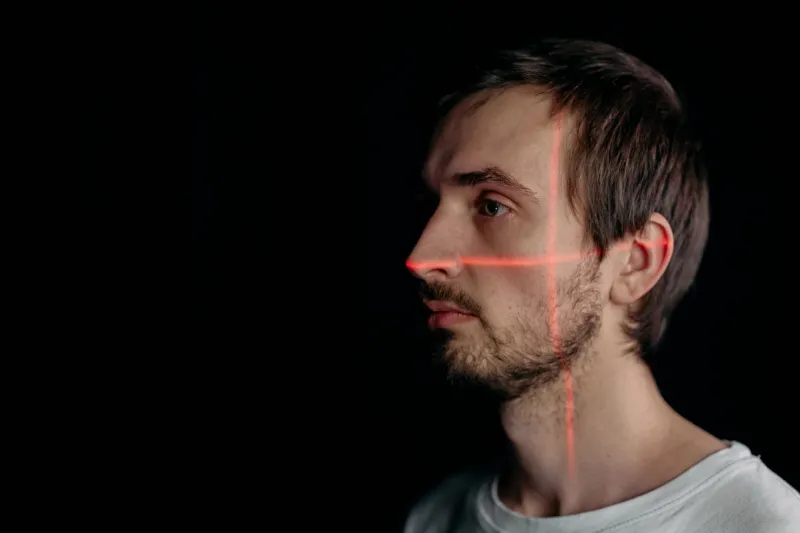
Not long ago, the term "deepfake" conjured images of clumsy celebrity face-swaps circulating on social media — unsettling, perhaps, but rarely mistaken for reality. That era is over. Advances in generative artificial intelligence have compressed years of laboratory research into consumer-grade tools, and the results are being weaponized against businesses, private citizens, and legal institutions at an accelerating pace. The question is no longer whether you will encounter synthetic media; it is whether you will recognize it in time.
From Novelty to Threat Vector
The mechanics of deepfake generation have become disturbingly accessible. Open-source models capable of producing photorealistic video from a handful of reference images are freely downloadable, and several commercial platforms offer polished interfaces requiring no coding expertise. Law enforcement agencies, including the FBI's Internet Crime Complaint Center (IC3), have issued repeated warnings that AI-generated audio and video are now active components in business email compromise (BEC) schemes, romance fraud operations, and targeted extortion campaigns.
One of the most instructive early cases occurred in the United Kingdom, where the CEO of a British energy subsidiary transferred roughly $243,000 to a fraudulent account after receiving what he believed was a phone call from his parent company's chief executive. The voice — accent, cadence, and authority intact — was entirely synthetic. American companies have since reported similar incidents, with attackers deploying AI-cloned audio during conference calls to authorize wire transfers or override internal security protocols.
The threat extends beyond corporate boardrooms. Prosecutors in several U.S. states have raised concerns about deepfake evidence entering legal proceedings, while researchers at universities including MIT and Carnegie Mellon have demonstrated that synthetic video can survive cursory review by untrained observers. The stakes, in other words, are no longer hypothetical.
What Your Eyes Can Catch
Detecting a well-constructed deepfake is not easy, but it is not impossible. Several perceptual indicators remain consistently difficult for current generation models to eliminate.
Facial boundary irregularities. The seam where a synthesized face meets the neck, hairline, or ears is frequently the weakest point in a deepfake. Look for unnatural blurring, inconsistent skin texture, or a subtle halo effect around the head, particularly when the subject moves.
Blinking and micro-expressions. Early deepfake models were notorious for producing subjects who rarely blinked. Contemporary tools have partially corrected this, but unnatural blink rates — either too infrequent or mechanically regular — remain a useful signal. Similarly, genuine human faces produce fleeting micro-expressions that AI models often flatten or omit entirely.
Lighting inconsistencies. Synthetic media struggles to replicate the way light interacts dynamically with three-dimensional surfaces. Shadows that do not shift when the subject turns, reflections that fail to appear in the eyes, or a flat, overly uniform skin luminance are all worth noting.
Audio-visual desynchronization. Even sophisticated deepfakes can exhibit subtle mismatches between lip movement and spoken syllables, particularly during rapid speech or consonant-heavy phrases. Watching a suspicious video without sound first — then with it — can make desynchronization more apparent.
Environmental artifacts. Backgrounds in deepfake video frequently exhibit warping or smearing near the subject's silhouette, especially during head movement. Straight lines in architecture or furniture that appear to bend as the subject moves are a reliable indicator of AI generation.
Technical Detection Tools
Visual inspection alone is insufficient for high-stakes decisions. A growing ecosystem of detection software has emerged to fill the gap, though no tool is infallible.
Microsoft's Video Authenticator, developed in partnership with the Partnership on AI, analyzes individual frames for blending artifacts and assigns a confidence score indicating the likelihood of manipulation. Intel's FakeCatcher platform takes a different approach, examining subtle changes in blood flow patterns beneath the skin — patterns that synthetic video cannot replicate. Researchers at Drexel University and the University of California, Berkeley have separately published models that identify deepfakes by analyzing frequency-domain anomalies invisible to the naked eye.
For audio specifically, tools like Resemble AI's Detect and ElevenLabs' own detection API (offered partly in response to misuse of their cloning platform) can flag synthetic speech with meaningful accuracy. It is worth noting, however, that detection accuracy degrades when deepfakes are compressed, re-encoded, or filtered through low-bandwidth communication channels — conditions common in exactly the scenarios where fraud occurs.
Emerging Authentication Standards
The technology industry is not relying solely on detection after the fact. The Coalition for Content Provenance and Authenticity (C2PA), a cross-industry initiative involving Adobe, Microsoft, the BBC, and others, is developing cryptographic content credentials that attach verifiable metadata to media at the point of creation. Under this framework, a camera or recording device signs the content with a digital certificate, and any subsequent modification breaks the signature chain — making tampering evident to compliant viewers.
The National Institute of Standards and Technology (NIST) has also begun addressing synthetic media within its broader AI risk management framework, pushing for standardized disclosure requirements and detection benchmarks. Federal legislation remains fragmented, though several states — including California and Texas — have enacted laws specifically targeting malicious deepfake use in political advertising and non-consensual intimate imagery.
Practical Steps for Organizations and Individuals
Awareness is the first line of defense, but it must be paired with procedural safeguards. Organizations should establish out-of-band verification protocols for any request — regardless of how it is delivered — that involves financial transfers, credential changes, or access escalation. A simple callback to a known, independently verified phone number can neutralize even the most convincing voice clone.
Individuals should treat unexpected video or audio communications from authority figures with the same skepticism they would apply to unsolicited emails. If a call from your bank, employer, or government agency creates urgency around immediate action, that urgency itself is a warning sign — synthetic or not.
Media literacy training is increasingly offered through nonprofit organizations including the News Literacy Project and the Digital Citizens Alliance. Both provide free resources tailored to American audiences that cover deepfake recognition alongside broader misinformation awareness.
The Road Ahead
The arms race between deepfake generation and detection is unlikely to resolve cleanly in either direction. As detection models improve, generative models are retrained against them — a dynamic that security researchers describe as an adversarial loop with no foreseeable endpoint. What can be controlled is the procedural and institutional environment in which synthetic media operates: the verification habits of individuals, the authentication standards adopted by platforms, and the legal frameworks that assign accountability when AI-generated content causes harm.
For now, the most effective defense remains a combination of informed skepticism, layered verification, and familiarity with the visual and acoustic signatures that betray even the most sophisticated synthetic face. The technology will keep improving. So, necessarily, must the people it is designed to deceive.