Auto-Renewed and Forgotten: How Dormant Subscriptions Are Quietly Draining Your Financial Security
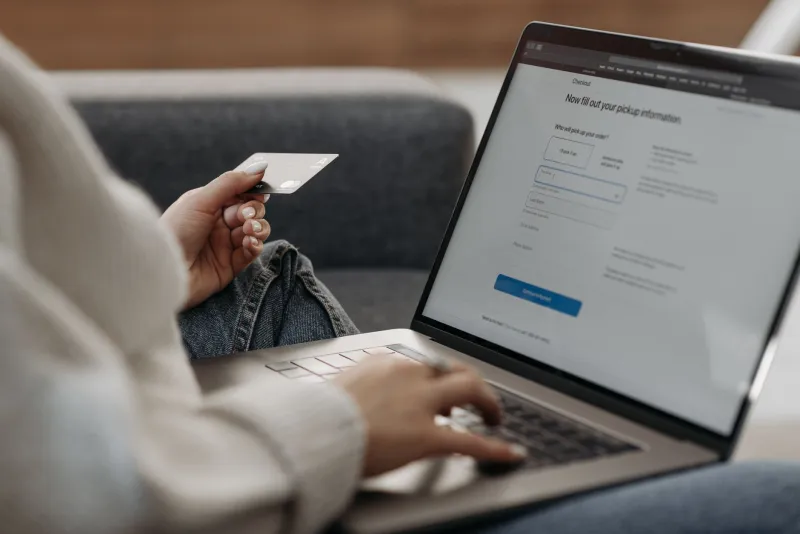
There is a particular kind of financial ghost that haunts the average American's bank statement — the subscription charge that appears month after month for a service you stopped using sometime around a previous president's administration. It is easy to dismiss these as minor nuisances. A few dollars here, a few there. What most people fail to appreciate, however, is that every active subscription is not merely a recurring expense. It is a persistent, live connection between your financial identity and a company's data infrastructure — one that may be far less secure than you assume.
The cybersecurity implications of forgotten subscriptions are underappreciated to a degree that borders on alarming. When you sign up for a service and provide your credit card number, billing address, and email, that data doesn't disappear when you stop logging in. It remains stored in that company's systems, often indefinitely, subject to whatever security posture — or lack thereof — the company happens to maintain.
The Data You Left Behind
Consider what a single subscription account typically holds: a payment method, a billing address, an email address tied to other accounts, and potentially answers to security questions, phone numbers, or even identity verification documents. Now multiply that across the average American household, which, according to research from subscription management platform Rocket Money, carries more than four subscriptions it actively wants to cancel but hasn't.
Each of those dormant accounts is a data point sitting in a database somewhere. Some of those databases are well-maintained and secured by competent engineering teams. Others are not. The 2021 breach of Twitch, the 2022 exposure of LastPass user vaults, and the 2023 MOVEit file-transfer exploit — which cascaded across hundreds of organizations — all demonstrated that even companies with substantial technical resources can fail to protect stored customer data. Smaller subscription services, including niche fitness apps, regional streaming platforms, and boutique e-commerce auto-replenishment programs, often operate with far fewer security resources.
When a breach occurs at one of these companies, the data most immediately valuable to criminal actors includes exactly what subscription services collect: payment card numbers, billing addresses, and email credentials. Cybercriminals routinely use stolen email-and-password combinations in credential-stuffing attacks, testing them against banking portals, retail accounts, and other high-value targets. If your forgotten meal-kit subscription uses the same password as your bank, the exposure chain extends far beyond a canceled delivery service.
Why Cancellation Is Deliberately Difficult
The frustration of canceling a subscription is not accidental. It is, in many cases, the product of deliberate design decisions made by product teams operating under pressure to minimize churn. The industry term is "dark patterns" — user interface choices engineered to confuse, delay, or discourage users from completing a desired action, in this case, cancellation.
Common tactics include burying cancellation options behind multiple confirmation screens, requiring users to call a phone number during limited business hours, presenting aggressive retention offers at the moment of cancellation, and sending confirmation emails that describe the account as "paused" rather than terminated. The Federal Trade Commission has taken increasing notice of these practices. In 2023, the agency proposed its "click-to-cancel" rule, which would require companies to make cancellation as simple as enrollment. The rule has faced legal challenges, but its existence reflects how widespread and recognized the problem has become.
From a security standpoint, these friction-laden cancellation processes have a concrete consequence: people give up. They stop paying attention to the charge. The subscription persists. The data exposure persists with it.
Real Consequences From Dormant Accounts
The connection between forgotten subscriptions and actual financial harm is not theoretical. In 2022, a wave of reports surfaced on consumer complaint forums and Reddit communities describing fraudulent charges traced back to breached accounts at smaller streaming and software subscription services. In several documented cases, attackers who obtained credentials from a minor breach used them to access linked PayPal accounts and Apple ID payment profiles — accounts the victims had connected years earlier and never revisited.
Similarly, the 2021 breach of Robinhood's customer support system exposed the email addresses of approximately five million users. Many of those users had created accounts during a period of high retail investing interest and subsequently became inactive. The exposure of their emails enabled targeted phishing campaigns months after the breach itself — a delayed harm that dormant account holders were poorly positioned to anticipate.
Conducting a Subscription Audit
Eliminating unnecessary recurring charges requires a methodical approach. The following process is designed to be thorough without requiring technical expertise.
Step one: Identify every active charge. Review your bank and credit card statements for the past three months, flagging any recurring charge regardless of size. Do the same for PayPal, Venmo business payments, and any digital wallets you use. Note the vendor name and the amount.
Step two: Cross-reference your email. Search your inbox for terms like "receipt," "invoice," "subscription confirmation," and "auto-renewal notice." Many subscriptions send monthly receipts that accumulate unread. This step frequently surfaces charges that don't appear clearly labeled on bank statements.
Step three: Check platform-level subscriptions. Apple ID, Google Play, Amazon, and PayPal all maintain their own subscription management dashboards. Navigate to the billing or subscriptions section of each and review active agreements independently of what your bank statement shows.
Step four: Cancel, don't merely pause. For every subscription you no longer actively use, pursue full cancellation rather than a pause or freeze option. Document the cancellation confirmation — screenshot it or save the confirmation email — and follow up after one billing cycle to confirm the charge has stopped.
Step five: Request data deletion where possible. Under the California Consumer Privacy Act and similar state-level frameworks, consumers in many states have the right to request that companies delete their personal data upon account termination. Even if you are not in a covered state, many companies honor deletion requests as a matter of policy. Submitting such a request removes your payment and personal information from their systems, eliminating the exposure entirely rather than merely reducing it.
Step six: Use virtual card numbers for future subscriptions. Services such as Privacy.com allow users to generate single-merchant virtual card numbers linked to a real bank account. If the virtual card is compromised in a breach, the exposure is contained to that one merchant, and the card can be frozen or deleted without affecting other accounts.
The Broader Principle
The subscription economy has made it easier than ever to accumulate digital relationships with companies you barely remember engaging with. Each of those relationships carries a data footprint that persists long after your interest fades. Treating subscription hygiene as a component of personal cybersecurity — rather than merely a budgeting concern — reframes the audit process in terms that reflect the actual risk involved.
Your financial data does not disappear when you stop logging in. Until you take active steps to sever the connection, it remains embedded in systems you no longer control or monitor. The discipline required to close those loops is modest. The potential cost of leaving them open is not.