The Connected Home Under the Microscope: What Your Smart Devices Know About You
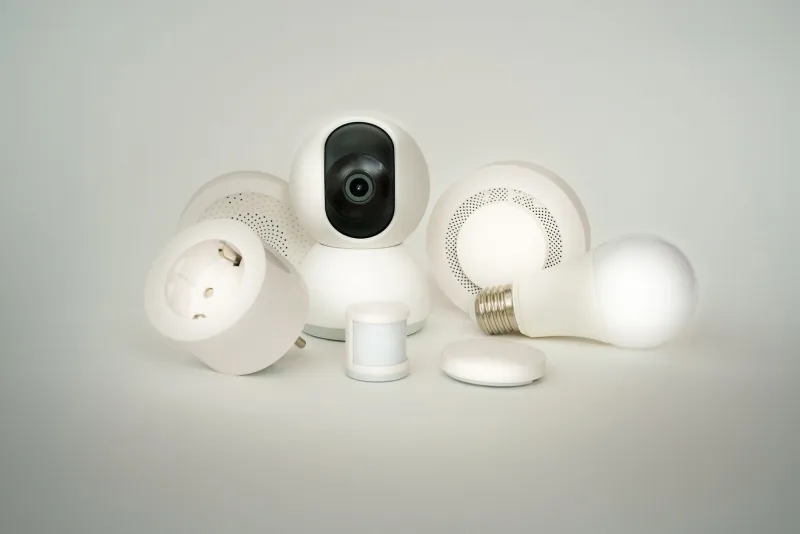
The American smart home has arrived. According to Statista, more than 60 million U.S. households now use at least one smart home device, and that number climbs annually as prices fall and ecosystems mature. Amazon, Google, Apple, and a constellation of third-party manufacturers have made it remarkably easy to fill a home with connected devices. What they have made considerably less easy is understanding exactly what those devices record, where that data goes, and who can access it.
This is not a call to dismantle your home network and return to analog living. It is, however, a call to read past the setup wizard.
The Living Room: Voice Assistants and Smart TVs
The voice assistant — whether an Amazon Echo, Google Nest, or Apple HomePod — is the most conspicuous privacy concern in most living rooms. These devices are designed to listen continuously for a wake word, which means their microphones are always active. While manufacturers maintain that audio is only transmitted to their servers after the wake word is detected, independent researchers have repeatedly documented instances of accidental activations triggered by words that phonetically resemble the intended trigger.
Amazon, Google, and Apple have all acknowledged that human reviewers have, at various points, listened to voice recordings to improve speech recognition accuracy. Each company now offers opt-out settings — but those settings are rarely enabled by default and are buried within account management interfaces that most users never visit.
What to do: Navigate to your voice assistant's privacy settings and disable the option to allow human review of recordings. Delete your voice history regularly. If you own an Amazon Echo, use the physical microphone mute button when the device is not actively in use.
Smart televisions present a separate but related concern. Most major brands — including Samsung, LG, and Vizio — incorporate automatic content recognition (ACR) technology, which samples what is displayed on the screen and reports viewing behavior back to the manufacturer and, frequently, to advertising partners. This occurs regardless of whether the content originates from a cable box, a streaming service, or a physical media player.
What to do: Locate the ACR or "Viewing Data" settings in your television's privacy menu and disable them. On Samsung TVs, this setting is labeled "Viewing Information Services." On Vizio, it appears under "Smart Interactivity."
The Front Door and Exterior: Smart Locks and Video Doorbells
Video doorbells and exterior cameras have become among the fastest-growing smart home categories. Ring — owned by Amazon — and Nest — owned by Google — dominate the U.S. market. Both devices capture video footage of public and semi-public spaces and store that footage, typically in the cloud.
The privacy implications extend beyond the homeowner. Ring's historical cooperation with law enforcement drew significant scrutiny after reporting revealed that the company had provided footage to police departments without user consent or a warrant in hundreds of cases prior to 2022. Amazon subsequently updated its policies to require legal process for most law enforcement requests, but the episode illustrated how data collected for personal security can migrate into other contexts.
Smart locks introduce a different risk dimension: access control. Many popular models, including those from Schlage, Yale, and August, are accessible via smartphone app and can be unlocked remotely. Weak account passwords, shared access codes that are never revoked, and unpatched firmware vulnerabilities have all been documented as vectors through which unauthorized access has been obtained.
What to do: Enable two-factor authentication on every account associated with a smart lock or doorbell camera. Audit shared access regularly and revoke credentials for former houseguests, contractors, or family members who no longer need entry. Keep firmware updated — most devices support automatic updates, which should be enabled.
The Bedroom: Sleep Trackers and Smart Speakers
Smart speakers placed in bedrooms capture ambient audio in the most private space in a home. The considerations outlined above for living room voice assistants apply with greater force here. Beyond that, connected sleep trackers — whether standalone devices or wearable integrations — collect granular physiological data including sleep duration, heart rate variability, respiratory patterns, and movement.
This data is stored on manufacturer servers and is subject to each company's privacy policy, which may permit sharing with third parties including health insurers, research organizations, or advertising platforms. The legal framework governing health data in the United States applies specifically to data handled by covered entities under HIPAA — a category that generally does not include consumer device manufacturers.
What to do: Review the privacy policy of any health-adjacent device before purchase. Look specifically for language regarding third-party data sharing and whether data can be sold. Consider whether the convenience justifies the data exposure, particularly for devices placed in sleeping areas.
The Kitchen: Connected Appliances
Refrigerators, ovens, and coffee makers with Wi-Fi connectivity may seem like low-stakes privacy concerns. In terms of data sensitivity, they largely are. The more significant risk is network security. A poorly secured smart appliance represents an entry point into a home network that may also host laptops, phones, and devices containing far more sensitive information.
In documented IoT compromise scenarios, attackers have used vulnerable smart appliances as pivot points to reach other devices on the same network — a technique known as lateral movement. A refrigerator with an unpatched vulnerability and a default password is not valuable in itself; it is valuable as a door.
What to do: Change default credentials on every connected appliance immediately after setup. Place smart appliances on a dedicated IoT network segment, separate from devices that handle sensitive data. Most modern routers support guest network or VLAN configurations that accomplish this without advanced technical knowledge.
Network-Level Hardening: The Foundation Everything Else Depends On
Device-level settings matter, but they operate within a broader network environment. A home router with a default password, outdated firmware, and no network segmentation undermines every individual privacy measure taken at the device level.
- Change the default router admin credentials immediately upon installation.
- Enable WPA3 encryption if your router supports it; WPA2 is acceptable but increasingly dated.
- Disable UPnP (Universal Plug and Play), which allows devices to automatically open network ports and has been exploited in numerous documented attacks.
- Create a separate network segment for IoT devices, keeping them isolated from computers and phones.
- Check your router manufacturer's website periodically for firmware updates, or enable automatic updates if available.
Understanding the Data Ecosystem
Perhaps the most important shift in perspective for smart home users is recognizing that device manufacturers are not simply selling hardware. They are building data pipelines. The revenue model for many connected devices extends well beyond the initial purchase price to encompass behavioral data, targeted advertising, and in some cases, data licensing arrangements with third parties.
That is not inherently sinister — it is the economic architecture of the modern consumer internet. But it means that the decision to install a connected device is also a decision about data sharing, and it deserves the same deliberation as any other consequential privacy choice.
The convenience of a smart home is real. So are the risks. The gap between them is largely closed by configuration, attention, and the willingness to spend thirty minutes in a settings menu that most manufacturers would prefer you never open.