Beyond the Password Box: How Passkeys, Biometrics, and Hardware Keys Are Rewriting Digital Identity
For decades, the password has served as the primary gatekeeper between private accounts and the public internet. Americans type them hundreds of times each week — into banking portals, email clients, streaming services, and social media platforms — often using the same combination of letters and numbers across multiple sites. Security researchers have long understood that this arrangement is fundamentally broken. Now, after years of incremental progress, the industry appears to have reached an inflection point. The password, as a primary authentication mechanism, is being phased out.
Apple, Google, and Microsoft — collectively responsible for the operating systems running on the vast majority of American devices — have each committed to passkey support across their platforms. The FIDO Alliance, an industry consortium that includes dozens of major technology firms, has been coordinating the technical standards underpinning this transition since 2012. What was once a niche concern among enterprise IT departments has become a mainstream consumer issue.
Understanding what is actually changing — and why — requires a clear-eyed look at the mechanics of each emerging authentication method, the genuine security improvements they offer, and the practical complications that remain.
Why Passwords Fail: The Structural Problem
The core vulnerability of the traditional password is not that users choose weak ones, though many do. The deeper problem is that passwords are shared secrets: when a user authenticates with a website, that site must store some representation of the password on its servers. This creates a persistent, centralized target. When a company suffers a data breach — and in 2024, breaches affecting hundreds of millions of Americans occurred with grim regularity — the stolen credentials frequently appear on dark web forums within days, available for purchase by other criminals.
Phishing compounds the problem. A convincing replica of a bank's login page can harvest a victim's credentials in seconds, regardless of how complex those credentials are. Multi-factor authentication mitigates some of this risk, but traditional SMS-based codes remain susceptible to SIM-swapping attacks, a form of fraud that has cost American consumers tens of millions of dollars annually according to FBI Internet Crime Complaint Center data.
The new generation of authentication methods addresses these structural weaknesses rather than simply demanding that users behave differently.
Passkeys: Cryptography Without the Complexity
A passkey is a cryptographic credential pair — one key stored on the user's device, one registered with the website or application. When a user attempts to sign in, the service issues a mathematical challenge that only the device's private key can answer correctly. Crucially, the private key never leaves the device. Even if the service's servers are compromised, there is no password hash for attackers to steal or crack.
For the user, the experience is deliberately simple. On an iPhone, authenticating with a passkey typically means a Face ID scan or a Touch ID press. On a Windows machine, it may involve Windows Hello facial recognition or a fingerprint reader. The underlying cryptography — based on public-key infrastructure standards — operates invisibly.
Google reported in 2024 that passkey sign-ins were completing at a meaningfully higher rate than traditional password flows, suggesting that the usability argument is real rather than theoretical. Apple has integrated passkey support into iCloud Keychain, allowing credentials to synchronize across a user's devices while remaining encrypted end-to-end.
Security experts are broadly positive but note important caveats. "Passkeys solve the phishing problem elegantly because the cryptographic challenge is domain-specific — a fake site simply cannot complete the handshake," one authentication researcher noted in a widely cited analysis. The concern, they added, is account recovery. If a user loses access to all their devices simultaneously, regaining access to passkey-protected accounts can be considerably more complicated than a standard password reset.
Biometric Authentication: Convenience With Trade-offs
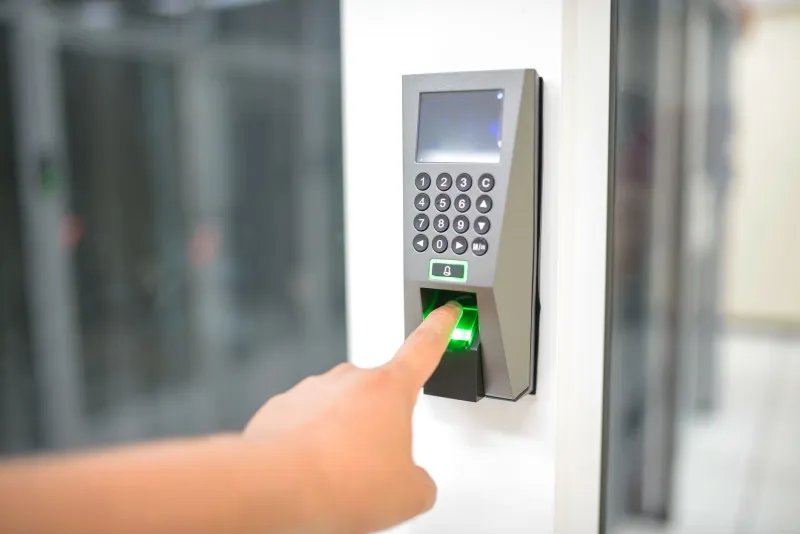
Biometrics — fingerprints, facial geometry, iris patterns — have become standard features on American smartphones and laptops. Their appeal is intuitive: a fingerprint cannot be guessed or phished in the traditional sense. However, the security properties of biometric systems are frequently misunderstood.
On modern devices, biometric data is processed locally within a dedicated hardware enclave (Apple's Secure Enclave, for instance) and is never transmitted to external servers. This is a meaningful protection. The biometric itself functions as a key to unlock a cryptographic credential, not as a password sent across a network.
The limitations are equally important to understand. Biometrics cannot be changed. A stolen password can be replaced; a compromised fingerprint cannot. Additionally, in the United States, courts have generally held that law enforcement may compel individuals to unlock devices using biometrics without a warrant in some jurisdictions, whereas compelling someone to reveal a memorized password implicates Fifth Amendment protections — a legal distinction with real-world consequences for privacy-conscious users.
Hardware Security Keys: The Gold Standard for High-Risk Accounts
For users managing sensitive accounts — journalists, activists, executives, financial professionals — hardware security keys represent the current apex of consumer authentication security. Devices such as YubiKeys and Google's Titan Security Key implement the FIDO2 and WebAuthn standards, generating cryptographic responses to authentication challenges when physically inserted into a USB port or tapped against an NFC reader.
Because the key must be physically present, remote phishing attacks are effectively neutralized. Google's internal deployment of hardware keys for its employees, reported to have eliminated account takeovers across its workforce, is frequently cited as evidence of the method's real-world effectiveness.
The practical drawbacks are genuine. Hardware keys cost between $25 and $70, require users to carry an additional physical object, and present a recovery challenge if lost. Security professionals generally recommend purchasing two keys and registering both with critical accounts, storing the backup in a secure physical location.
Practical Guidance for American Users
For most Americans, the immediate priority is enabling passkey support wherever it is offered. Major platforms including Google, Apple, Microsoft, PayPal, GitHub, and a growing roster of financial institutions now support the standard. Users should also review their existing multi-factor authentication settings, replacing SMS-based codes with authenticator applications — such as Google Authenticator or Authy — which are not vulnerable to SIM-swapping.
Those managing high-value accounts or operating in professions that attract adversarial attention should seriously evaluate hardware security keys. The investment is modest relative to the protection provided.
Finally, account recovery options deserve careful attention during any authentication transition. Ensuring that recovery email addresses and phone numbers are current, and understanding a platform's recovery process before an emergency occurs, remains a basic but frequently neglected precaution.
The Road Ahead
The transition away from passwords will not be instantaneous. Hundreds of thousands of websites still rely on traditional password authentication, and the process of migrating legacy systems is expensive and time-consuming. For the foreseeable future, most Americans will be managing a mixed environment — passkeys and biometrics for some accounts, passwords for others.
What has changed is the direction of travel. The industry consensus, now backed by concrete technical standards and major platform commitments, points clearly toward a future in which the password is a legacy artifact rather than a daily necessity. For security-conscious users, the window to get ahead of that transition — and to understand its genuine implications — is open now.