Forged by Algorithm: How AI-Crafted Fake IDs Are Defeating Identity Verification Systems
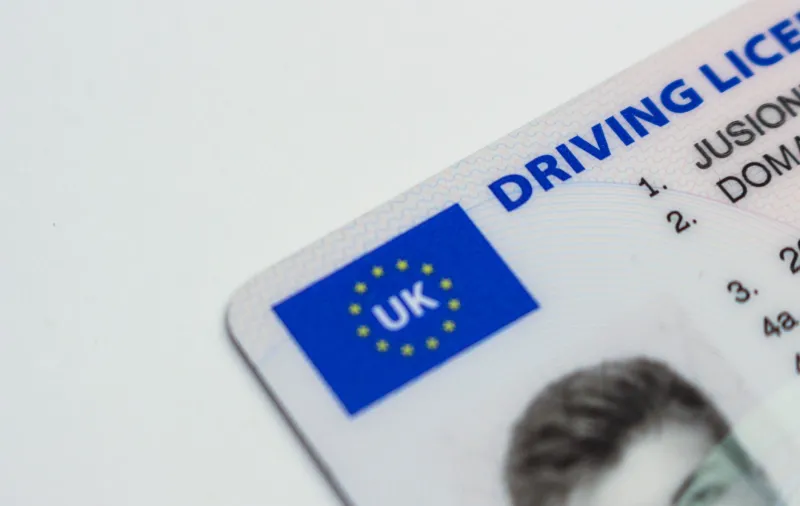
For most of the last century, producing a convincing counterfeit government-issued identity document required specialized equipment, physical materials, and a level of craft skill that kept the practice confined to organized criminal networks and state-sponsored intelligence operations. That barrier has effectively collapsed. Generative artificial intelligence tools — some commercially available, others circulating in underground forums — have reduced the production of photorealistic fake driver's licenses, passports, and institutional credentials to a task measurable in minutes, executable by individuals with no technical background whatsoever.
The consequences are arriving faster than the verification industry can respond.
The Technical Shift That Changed Everything
The underlying technology is not mysterious, though its implications are profound. Diffusion models and generative adversarial networks — the same classes of AI architecture behind consumer image-generation tools — can be fine-tuned on datasets of real identity documents to produce synthetic versions that replicate holographic textures, microprint patterns, barcode formatting, and photograph placement with a fidelity that confounds automated optical-character-recognition systems.
Earlier generations of fake IDs were physically detectable under ultraviolet light or by trained examiners familiar with state-specific security features. The current generation of AI-produced forgeries presents a different challenge: they are not physical objects at all. They are digital image files submitted through online verification portals — and they are optimized specifically to pass the algorithmic checks those portals rely on.
Security researchers have demonstrated that certain commercially deployed identity-verification APIs can be defeated by AI-generated document images at success rates that, even in conservative estimates, represent a meaningful and operationally significant vulnerability.
Where These Forgeries Are Appearing
The application vectors are broad and growing. Financial services represent the highest-value target. Know-Your-Customer (KYC) compliance requirements obligate banks, cryptocurrency exchanges, and fintech platforms to verify user identities during account onboarding. When that verification relies on a user uploading a photograph of their ID alongside a selfie — as many platforms require — the system's integrity depends entirely on its ability to distinguish authentic documents from AI-generated facsimiles.
In 2024, multiple cryptocurrency exchanges disclosed that they had identified clusters of fraudulent account openings in which AI-generated identity documents had cleared initial verification checks. The accounts were subsequently used for money laundering and fraud schemes, with losses distributed across legitimate users and institutional counterparties.
Beyond financial services, AI-forged documents have appeared in employment screening contexts. Background-check vendors that accept digital document submissions have encountered fabricated credentials, including forged professional licenses and institutional diplomas, produced with AI assistance. In several documented cases, individuals obtained positions in healthcare and financial services using credentials that did not withstand subsequent manual review — reviews that only occurred after suspicious behavior triggered a secondary audit.
The academic sector has also been affected. University admissions processes that rely on digital transcript submissions have faced AI-forged academic records originating from both domestic and international applicants.
Law Enforcement's Response
Federal agencies have begun treating AI-assisted document fraud as a priority threat category. The Department of Homeland Security's Document and Benefit Fraud Task Forces, which operate across major metropolitan areas, have updated their investigative protocols to account for digitally produced forgeries that lack the physical tells of traditional counterfeits.
In 2023 and 2024, federal prosecutors in the Southern District of New York and the Northern District of California brought cases involving AI-assisted identity fraud tied to fraudulent financial account openings, with defendants charged under 18 U.S.C. § 1028, the federal statute governing identity document fraud. Sentencing guidelines under that statute carry potential imprisonment of up to 15 years for aggravated offenses, a penalty range that prosecutors have emphasized in public statements intended to deter opportunistic actors who may underestimate the legal exposure.
The FBI's Internet Crime Complaint Center has issued advisories to financial institutions specifically addressing the use of deepfake imagery — including AI-generated documents — in identity fraud schemes, and has encouraged organizations to report incidents that may indicate coordinated fraud campaigns rather than isolated individual actors.
The Detection Arms Race
The verification industry is adapting, though the pace of adaptation trails the pace of the threat. Several emerging detection approaches show genuine promise.
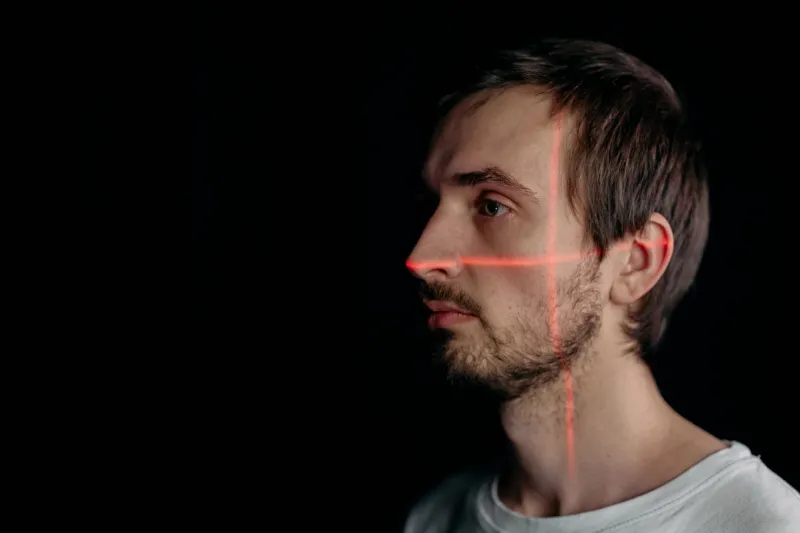
Liveness detection and 3D depth analysis: Rather than relying solely on a static document image, advanced verification systems now require applicants to perform real-time facial movements during video capture, making it substantially harder to substitute a static AI-generated photograph. Some platforms have introduced 3D depth mapping to confirm that a presented face is a physical object rather than a screen display.
Document forensic analysis at the pixel level: AI-based forensic tools trained to identify statistical artifacts introduced by generative models — including inconsistencies in noise patterns, unnatural frequency signatures, and compression anomalies — are being integrated into enterprise verification pipelines. These tools operate on principles similar to those used in digital image authentication for legal and journalistic contexts.
Cross-referencing against authoritative databases: Several states have begun offering API-level verification services that allow credentialed institutions to confirm that a submitted driver's license number corresponds to an actual issued document in the state's motor vehicle database. Wider adoption of such authoritative-source verification would substantially reduce the viability of purely synthetic documents.
Behavioral biometrics: Some financial institutions are supplementing document verification with behavioral analysis during the onboarding session — measuring typing cadence, mouse movement patterns, and session metadata to flag interactions that appear scripted or automated.
What Organizations and Individuals Should Know
For organizations that rely on identity verification — whether for customer onboarding, employee screening, or benefits administration — the practical guidance is directional rather than prescriptive, because the threat landscape is evolving rapidly. Verification systems that were certified as adequate 18 months ago may no longer meet a reasonable standard of due diligence. Engaging with verification vendors to understand their current AI-forgery detection capabilities, and requesting documentation of their testing protocols against synthetic document attacks, is a reasonable starting point.
For individuals, the primary concern is protective rather than defensive in the traditional sense. The proliferation of AI document forgery tools means that your identity — specifically, your name, date of birth, photograph, and document numbers — has elevated value as raw material for synthetic credential construction. Protecting the documents and data points that feed that process is increasingly important: limiting the unnecessary sharing of document photographs online, monitoring credit reports for account openings you did not initiate, and placing a security freeze with the three major credit bureaus if you have reason to believe your identity information has been exposed.
The forgery problem is not new. The scale, accessibility, and technical sophistication of the current generation of AI-assisted forgery tools is. Institutions and regulators who treat this as an incremental update to a familiar threat are likely to find themselves consistently behind the adversaries exploiting it.