After the Breach: Decoding Your Rights Under America's Patchwork of Data Notification Laws
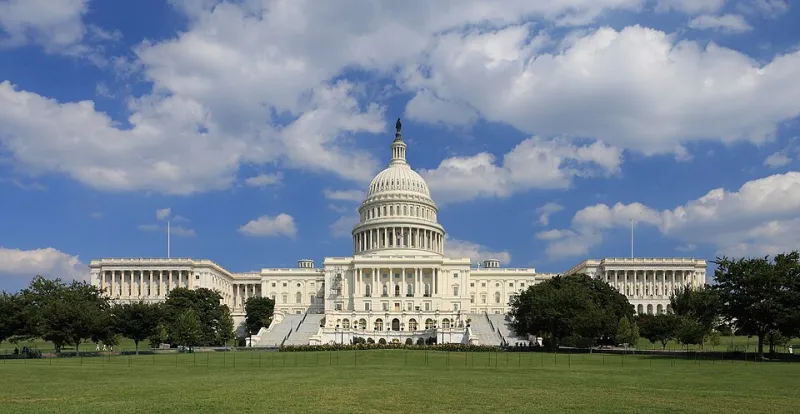
Photo: Martin Falbisoner, CC BY-SA 3.0, via Wikimedia Commons
Somewhere in the United States right now, a company is deliberating over a breach notification letter it is legally required to send you. The legal team is reviewing the language. The PR department is softening the wording. And the clock—depending on which state you live in—may or may not be ticking very loudly.
The United States has no single federal data breach notification law. What it has instead is a mosaic of fifty state statutes, several sector-specific federal regulations, and a set of enforcement mechanisms that vary so dramatically in scope and teeth that two consumers whose data was compromised in the same breach, living two miles apart across a state line, may have entirely different rights.
This is not an accident. It is the predictable result of two decades of legislative gridlock at the federal level, during which time states filled the vacuum at different speeds and with different priorities. The outcome is a system that legal scholars routinely describe as the most fragmented consumer data protection framework in the developed world.
How the Current Landscape Took Shape
California broke ground in 2003 with the first state breach notification law in the country, Senate Bill 1386. The statute was narrow by today's standards—it covered only computerized personal information and applied only to California residents—but it established a template that other states began adapting almost immediately.
By 2018, all fifty states had enacted some form of breach notification requirement. The problem is that "some form" encompasses an enormous range of obligations. Some states mandate notification within 30 days of a breach being discovered. Others allow 60 or 90 days. A handful have no fixed deadline at all, requiring only notification within a "reasonable" timeframe—a standard that has proven difficult to enforce consistently.
The definition of "personal information" that triggers notification requirements also varies. Most states cover Social Security numbers, driver's license numbers, and financial account credentials. Fewer than half explicitly cover medical information outside the context of HIPAA-covered entities. Biometric data—fingerprints, facial geometry, voiceprints—is covered under some of the newer statutes, particularly in Illinois, Texas, and Washington, but remains unaddressed in many others.
The Federal Layer: Sector-Specific Rules That Coexist With State Law
Layered on top of state law are several federal frameworks that apply to specific industries, regardless of where affected individuals reside.
The Health Insurance Portability and Accountability Act (HIPAA) requires covered healthcare entities to notify affected individuals within 60 days of discovering a breach involving protected health information. Breaches affecting more than 500 residents of a state must also be reported to the Department of Health and Human Services, which publishes a public breach portal commonly referred to in the industry as the "Wall of Shame."
The Gramm-Leach-Bliley Act (GLBA) governs financial institutions. A 2022 rule update from the Federal Trade Commission now requires GLBA-covered entities to notify the FTC within 30 days of discovering a breach affecting 500 or more customers—a significant tightening of previous requirements.
The Federal Trade Commission Act, while not a breach notification statute per se, gives the FTC authority to pursue enforcement actions against companies whose data security practices—including failure to notify consumers—constitute unfair or deceptive trade practices. This has been used in several high-profile settlements.
For consumers, the practical implication is this: if your data was compromised through a healthcare provider, insurer, or financial institution, federal timelines and protections apply in addition to whatever your state requires. If it was compromised through a retailer, a data broker, or a social media platform, you are substantially more dependent on your state's framework.
Reading the Letter: What Companies Are (and Aren't) Telling You
Breach notification letters are, as a genre, masterpieces of strategic vagueness. Understanding what to look for—and what conspicuous omissions signal—is a practical skill worth developing.
What a legitimate notification should include:
- A clear description of what type of data was involved
- The approximate date the breach occurred and the date it was discovered
- What the company has done or is doing to contain the incident
- Specific steps you should take to protect yourself
- Contact information for a dedicated response line or identity protection service
Red flags that warrant follow-up:
- Dates described only in vague terms ("recently" rather than specific timeframes)
- Descriptions of compromised data categories that are unusually broad or unusually narrow
- Identity protection offers with very short enrollment windows, which can pressure consumers into accepting terms before they fully understand them
- No mention of whether law enforcement has been notified
If a notification letter leaves you uncertain about whether your Social Security number or financial credentials were exposed, you are entitled to ask the company directly and in writing. Document every communication.
State-by-State: Key Variations to Know
While a comprehensive legal review of all fifty states exceeds the scope of any single article, several states merit particular attention for the strength—or notable weakness—of their frameworks.
California operates under the California Consumer Privacy Act (CCPA) and its 2020 amendment, the CPRA, which together provide some of the strongest consumer data rights in the country, including the right to know what data a business holds, the right to deletion, and a private right of action for certain breach scenarios.
New York enacted the SHIELD Act in 2019, broadening its definition of private information and extending obligations to any business that handles New York residents' data—not just businesses physically located in the state.
Illinois has the Biometric Information Privacy Act (BIPA), which is arguably the most aggressive biometric data protection law in the United States, providing a private right of action with statutory damages that has resulted in several landmark class-action settlements.
Alabama and South Dakota were the last two states to enact breach notification laws, doing so in 2018. Their statutes are considered among the narrower in scope, with higher thresholds for what constitutes a notifiable breach.
Texas and Florida have both strengthened their frameworks in recent years, with Florida's 2021 amendments reducing notification timelines and expanding the definition of covered data.
What You Can Actually Do After a Breach
Knowing your rights matters only if you act on them. Following any credible breach notification, consider these steps in sequence.
Place a fraud alert or credit freeze with all three major credit bureaus—Equifax, Experian, and TransUnion. A freeze is free under federal law and prevents new credit from being opened in your name without your explicit authorization. This is the single most effective protective measure available to most consumers.
Monitor your Explanation of Benefits (EOB) statements if medical information was involved. Medical identity theft often goes undetected far longer than financial identity theft and can have consequences that are significantly harder to reverse.
If you believe the company's notification was delayed beyond the legally required window, or that the scope of disclosure was materially incomplete, you can file a complaint with your state Attorney General's office. Many AGs maintain dedicated consumer protection divisions, and enforcement actions—while not guaranteed—do occur.
For significant financial harm resulting from a breach, consult a consumer protection attorney. Class-action litigation has resulted in meaningful settlements in several major breach cases, and contingency-fee arrangements mean many attorneys will evaluate your case at no upfront cost.
The Case for Federal Reform
Data does not respect state lines. A breach at a national retailer's headquarters in one state affects consumers in all fifty. The argument for a uniform federal notification standard—with a fixed timeline, a comprehensive definition of covered data, and a meaningful private right of action—is not a partisan one. It is a structural one.
Until that legislation materializes, American consumers are best served by understanding the specific protections available in their own state, reading breach notifications critically rather than passively, and treating every notification as a prompt for action rather than an inconvenient formality.
The companies that hold your data have legal teams, PR strategists, and crisis communications consultants working on every notification they send. You are entitled to read those letters with equal care.